



Contents: A set of tools for routine…↡ A set of tools for general and major…↡ Special tool ↡ Purchasing a tool ↡ Care and storage of the instrument ↡ Workplace equipment ↡
Selecting a good tool is one of the basic requirements for anyone planning to perform maintenance or repair procedures on their own. At first glance, the costs associated with purchasing the required set of tools may seem too high, but when compared with the costs associated with performing routine maintenance and simple repairs to a car at a service station, they will be quite reasonable.
To assist the average car owner in selecting the tools needed to perform the various car maintenance procedures described in this manual, the following are lists of three tool kits, conventionally titled: Routine Maintenance and Minor Repair Tool Kit; a set of tools for general and major repairs and a special tool. Car owners who do not have practical experience in mechanical work should start with performing procedures limited to the use of tools from the first list, while improving their skills and gradually expanding the range of tools used. As experience is gained, you can move on to performing more complex tasks, supplementing the set of tools you have on hand. After some time, the acquired skills will allow you to begin performing more complex work requiring the use of tools from the second list (for general and major repairs of the car). When your skills begin to allow you to save significant funds by independently performing complex repair procedures, you can think about purchasing a special tool.
A set of tools for routine maintenance and minimal repairs of a car
The list below includes the minimum tools needed to perform routine maintenance and minor repairs on your vehicle. It is recommended that you purchase a set of combination wrenches (with a regular open-end head on one end and a socket head on the other). Despite the high cost of such a set compared to the cost of a set of conventional open-end wrenches, the costs will be justified, since these wrenches have the advantages of both types.
- Set of combination wrenches (1/4 - 1 inch); 6 - 19 mm)
- Adjustable wrench
- Spark plug wrench (with rubber insert)
- Spark plug gap adjustment tool
- Set of measuring probes
- Brake Bleeding Nipple Key
- Screwdrivers:
- With a flat tip (150mm long and 8mm in diameter)
- With cross blade (No. 2 x 6 inches) (150 mm long)
- Combination pliers
- Hacksaw for metal with a set of blades
- Tire pressure gauge
- Grease gun (syringe)
- Oil canister
- Fine sandpaper
- Wire brush
- Tool for stripping battery terminals and wire contacts
- Oil filter removal key
- Funnel (medium size)
- Supports for fixing the car in a raised position 2 pcs.
- Drainage tank
If routine maintenance procedures include making basic adjustments, you will also need to purchase a good quality strobe light and a combined tachometer / instrument to measure the duration of the closed state of the breaker contacts. Despite the fact that these tools are included in the list of special tools, they are mentioned here in view of the absolute necessity of their use for high-quality tuning of the engine ignition, which is part of the car's routine maintenance procedures.
A set of tools for general and major car repairs
This tool is necessary for any car engine repair operations and is offered in addition to the first list. This list includes a complete set of replaceable socket heads. Despite the considerable cost, the set of replaceable heads brings invaluable benefits due to its versatility and ease of use - especially in combination with the various types of drives included in the set. It is recommended to use preferably drives with a cross-section of ½ inch (and not 3/8 inch), because although they are more expensive, they can be used with almost any type of torque wrench (ideally, a good mechanic should have both types of drives at his disposal). A cheaper alternative to a set of socket heads is a set of tubular wrenches.
- Set of replacement socket heads (including Torx type heads) (or tubular wrenches), sizes corresponding to the sizes of wrenches from the previous list
- Ratchet reversible drive (for use with interchangeable socket heads)
- Gate length 250 mm
- Universal (cardan type) hinge (for use with socket heads)
- Torque wrench (with the same size drive as for socket heads)
- Round Peen Hammer - 8 oz (about 230 g)
- Soft-faced hammer (plastic or rubber)(mallet)
- Screwdrivers:
- With a flat tip (150 mm long and about 6.5 mm in diameter)
- With flat tip (strong No.2, 8 mm)
- With cross blade (No. 3 x 8 inches (203 mm))
- With a cross sting (strong No.2)
- Clamping pliers
- Pliers:
- For electricians (with insulated handles)
- Narrow-nosed (needle nose pliers)
- For retaining rings (internal and external)
- Chisel - inch (13 mm)
- Scraper (made from a copper tube flattened and pointed at one end)
- Scriber (scribe)
- Kerner
- Beards with a thin sting (1.6, 3.2, 4.8 mm)
- Steel ruler/flatness gauge
- Set of Allen keys (for hexagon socket heads)
- Set of files
- Wire brush (large)
- Second set of supports
- Jack (hydraulic or scissor type)
Another tool that is always in demand is a power drill with a 3/8 inch (up to 9.5 mm) chuck and a good quality drill bit set.
Special tool
This list includes tools that are quite expensive, not needed regularly, or require following the manufacturer's instructions when using. If your area of activity does not include frequent complex mechanical operations, purchasing such a tool will be a bad investment. It is reasonable to buy it together with friends or rent it from auto repair shops.
The list includes only those tools that can be found in retail or that are issued for distribution to representative offices of companies. Sometimes in the text of the Manual you will find references to such special tools. Usually the authors try to simultaneously offer an alternative method that allows you to avoid the mandatory use of a hard-to-find tool. If it is impossible to avoid using a special tool, and acquiring it for use is problematic, it is better to entrust the performance of the relevant work to car service specialists.
- Valve Spring Compressor Tool
- Piston Ring Groove Cleaning Tool
- Piston Ring Crimping Tool
- Piston Ring Installation Tool
- Cylinder Compression Gauge (compression meter)
- Countersink for processing cylinder edges
- Hone for processing cylinder mirrors
- Cylinder Bore Gauge
- Micrometer (micrometers) and/or dial caliper
- Hydraulic tappet removal tool
- Ball joint separator
- Universal type puller
- Impact screwdriver
- Dial Gauge Set
- Stroboscope (with inductive sensor)
- Hand Combination Pump (vacuum/pressure)
- Tachometer
- Universal tester for electrical measurements
- Lifting rigging
- Tool for removing/installing brake springs
- Floor jack
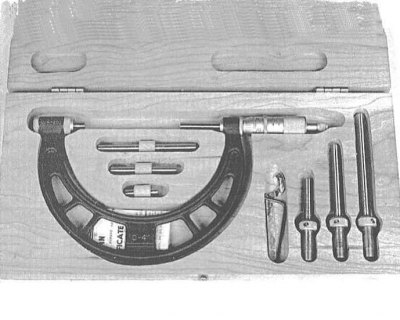
Micrometer with a set of attachments |
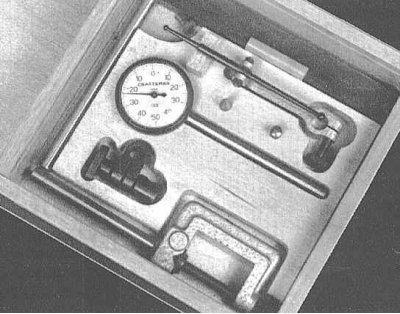
Dial gauge with a set of clamps and attachments |
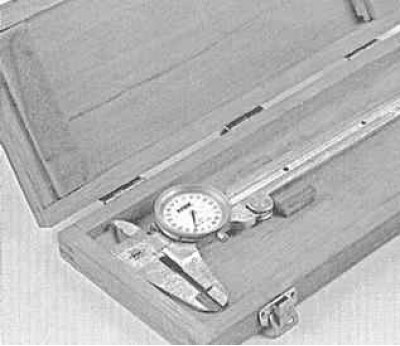
Dial/Vernier Caliper |
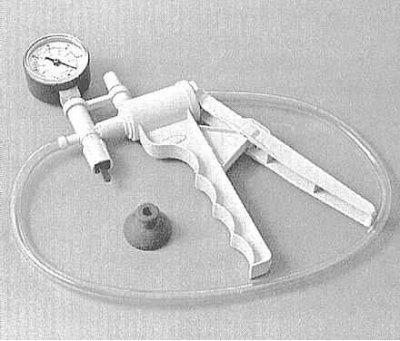
Hand operated vacuum pump |
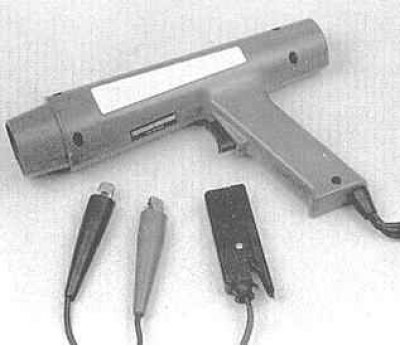
Stroboscope |
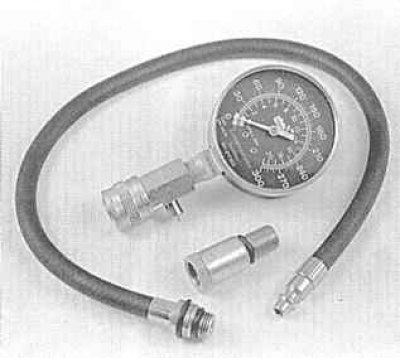
Compression gauge with spark plug hole attachment |
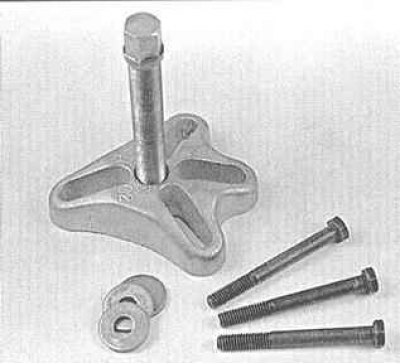
Damper/Steering Wheel Remover |
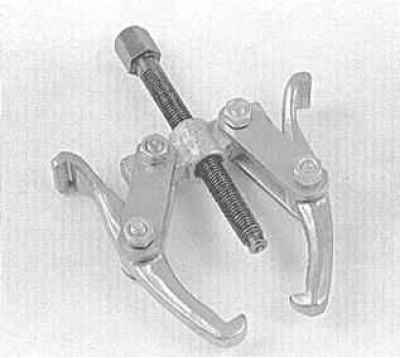
General purpose puller |
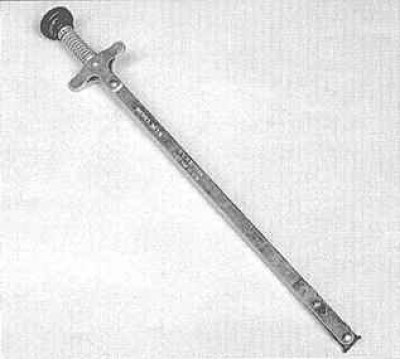
Hydraulic tappet removal tool |
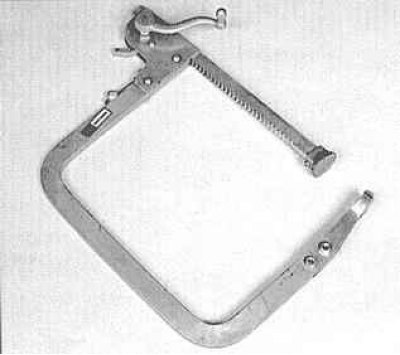
Valve Spring Compressor Tool |
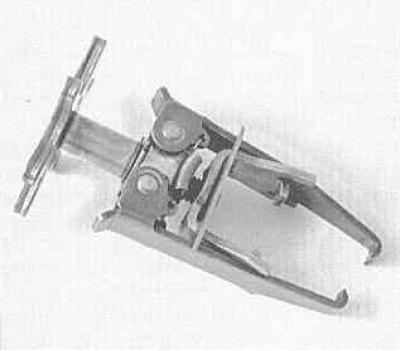
Valve Spring Compressor Tool |
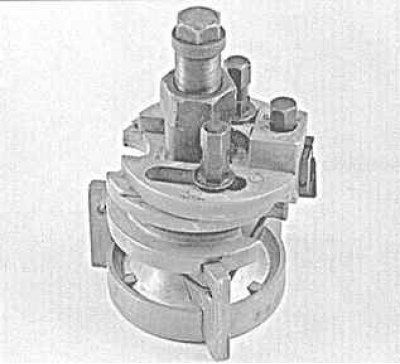
Countersink for removing stepped wear in a cylinder |
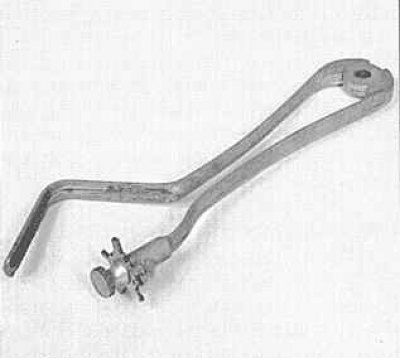
Piston Ring Groove Cleaning Tool |
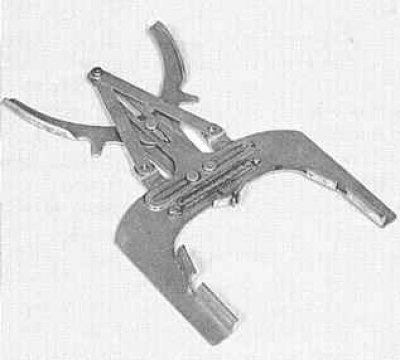
Piston ring removal/installation tool |
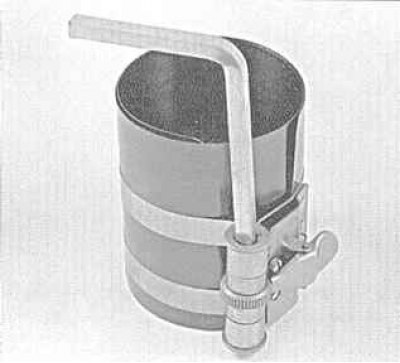
Piston Ring Crimping Tool |
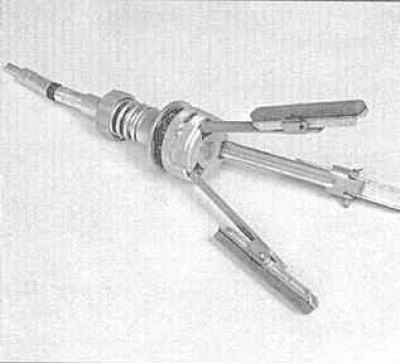
Hone for processing cylinder mirrors |
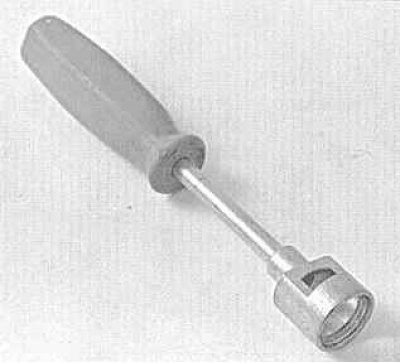
Tool for removing brake shoe guide spring cups |
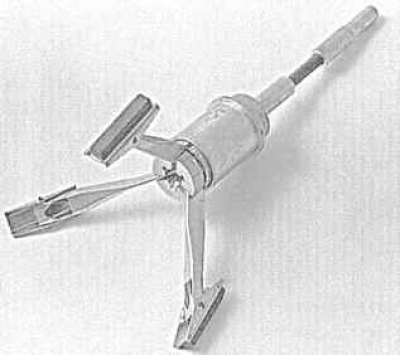
Hone for processing brake cylinders |
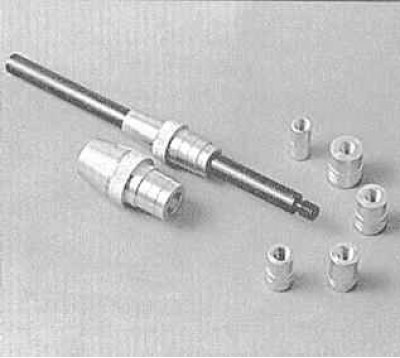
Clutch Disc Centering Tool |
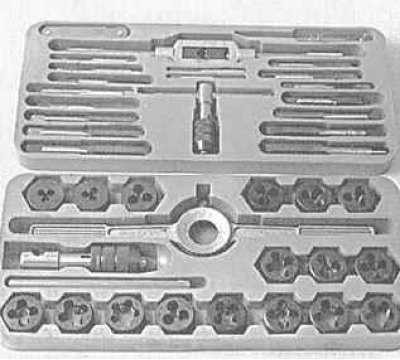
Set of taps and dies |
Material taken from a web resource www.mercedesman.ru
Purchasing a tool
A novice mechanic can be offered several practical tips in terms of purchasing the necessary tools for performing routine maintenance and repair procedures of a car. When preparing to perform routine maintenance procedures or minimal repairs of a car, it is reasonable to purchase tools separately. On the other hand, in case of planning extensive work, it is easier and more reliable to buy a set of modern tools in a retail store. Purchasing a set is usually somewhat cheaper than individual purchases and is often supplemented by an attached tool box. In the future, to expand the choice, individual tools, additional sets and a larger tool box can be purchased. Gradually expanding the set of tools will allow you to stretch out the costs and decide on the choice of the really necessary tools.
Specialty tool stores are the only source for some specialty tools, but regardless of the source, avoid cheap purchases, especially when choosing screwdrivers and socket heads, as their service life is likely to be short. The costs associated with replacing and restoring a cheap tool will ultimately be incomparably greater than the cost of a one-time purchase of a quality product.
Care and storage of the instrument
A good tool is a valuable investment, so it is wise to take care to keep it clean and always ready for use. After using the tool, before storing it, always wipe its surface thoroughly with a clean, dry cloth, removing traces of dirt, grease and metal particles. Never leave the tool scattered around the work area. After completing work, carefully check the space under the hood and under the car for forgotten tools.
A tool comb mounted in a convenient place on the garage wall is ideal for storing tools such as screwdrivers, pliers, hammers, etc. Sets of wrenches and socket heads should be stored in metal boxes. Measuring tools should be stored in dry, clean, and corrosion-proof places.
You should always pay attention to the condition of the working surfaces of the tool. The striking part of the hammer head is subject to riveting during work, and screwdrivers lose the sharpness of their tips over time. Do not skimp on spending a little time and attention to remove rivets and tidy up the cutting edges with sandpaper or a file. Replace irreversibly worn or damaged tools.
With careful care, the instrument will serve you faithfully for a very long time.
Workplace equipment
When talking about tools, we cannot forget about the equipment of the workplace. If more serious work than simple maintenance is to be carried out, it is necessary to take care of the preparation of a suitable work site.
It must be admitted that many car enthusiasts are forced to remove the engine and other similar work far from a garage or workshop. However, in any case, an important requirement is the presence of a roof or awning.
If possible, any procedures for disassembling parts of vehicle systems should be performed on a clean, flat workbench or a sturdy table of a comfortable height. The workbench must be equipped with a vice. A vice with a jaw opening of up to 100 mm and with soft pads on the jaws is sufficient.
As mentioned above, the work site should be equipped with a clean, dry place for storing tools, lubricants and cleaning fluids, putties, paints and varnishes, etc.
It should be noted that an absolutely necessary tool is an electric drill, therefore, the work site must be equipped with a power source for its connection. Having a drill with a chuck up to 9.5 mm and a set of high-quality drills will greatly facilitate the implementation of many procedures.
Finally, the workplace should always have an adequate supply of old newspapers and clean, lint-free rags available for cleaning the work area, tools, and vehicle parts.
Waste must be delivered to recycling centers in sealed containers.
Never do any work on the uncovered painted surface of the car, use protective pads on the fenders, or, at worst, cover the polished surfaces with old blankets.