



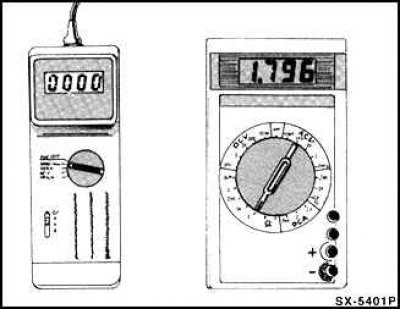
To measure electrical parameters in the on-board circuit, there are so-called combined measuring instruments available for sale, which in one device combine a voltmeter for measuring voltage, an ammeter for measuring current, and an ohmmeter for measuring resistance.
Commercially available measuring devices differ from each other mainly in the range and accuracy of measurements. The measurement range determines in which area the voltage and resistance to be recorded should be.
For car enthusiasts, there are combined measuring devices that are specially designed to carry out control work in a car. With the help of such a device, it is possible to measure the rotation frequency of the shaft in the car, the angle of the closed state of the contacts of the ignition system breaker and voltage up to 20 V.
When measuring resistance, the device is usually limited to a range in kilo-ohms. In addition, measuring devices are used to test electrical and electronic components of a structure. They allow a wide range of measurements from small resistances in ohms to the mega-ohm range. Voltages (V) can be measured very accurately, which is primarily required to test electronic components of a structure.
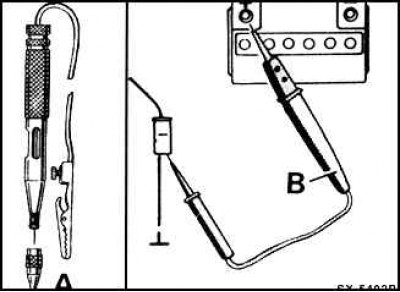
If you only want to check whether voltage (V) is being supplied at all, then a simple test lamp (A) is suitable for this. However, this is only true for electrical circuits that do not have electronic components. However, electronic components are extremely sensitive to excessively high currents. Under certain circumstances, they can fail even when the test lamp is connected.
Attention! When checking electronic components (transistors, diodes and control units) it is necessary to use a high-resistance voltage indicator (V). It works in the same way as a control lamp, but without damaging the electronic elements of the structure, and is suitable for carrying out all control operations.
(Original source of information: «www.mercedesman.ru»)