
Cars BMW Cars Volkswagen Cars Chevrolet Cars Land Rover Cars Lada Cars Honda Cars Peugeot
English Русский
Български
Беларускі
Український
Српски
Hrvatski
Română
Polski
Slovenský
Magyar
Bookmark News and articles Sitemap Feedback Site search
MercedesMan.ru


A-Class C-Class E-Class G-Class M-Class S-Class Others
W116 (1972-1980, petrol) W126 (1979-1991, petrol) W140 (1991-1998) W220 (1998-2005)
  • Main
  • S-Class
  • W116 (1972-1980)
  • General information
  • Introduction to guide
  • Correct lifting of the car

Correct lifting of the car (Mercedes-Benz S-Class W116)

0
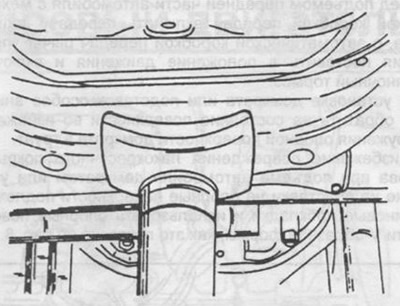
To avoid damage to the underbody, the lift can only be placed in certain locations. At the front, the lift is placed under the crossbar located below the front suspension, as shown in Fig. 5.

Fig. 5. Raising the front of the car.

Fig. 5. Raising the front of the car.


When installing the lift, be careful not to dent the lower mudguard. To lift the rear of the vehicle, place the lift under the main gear housing, as shown in Fig. 6.
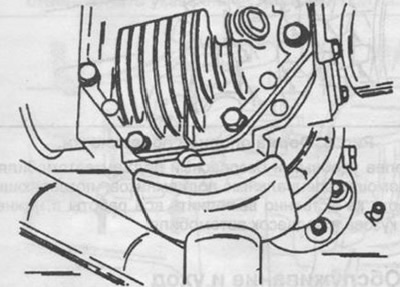
Fig. 6. Raising the rear of the car.

Fig. 6. Raising the rear of the car.


The jack from the tool kit supplied with the vehicle should be placed in the sockets located on both sides at the bottom of the body behind the front wheel and in front of the rear wheel (Fig. 7). It is not allowed to install the jack under the engine oil pan, gearbox housing, etc., as this may cause serious damage.


[Article obtained from this portal: MercedesMan.ru]
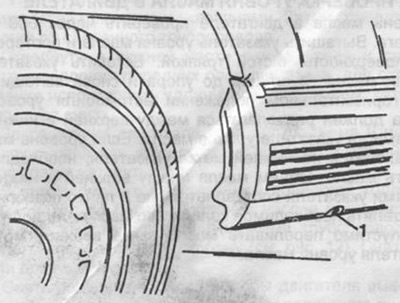
Fig. 7. Installation location (1) of the jack. There is a similar place on the rear side.

Fig. 7. Installation location (1) of the jack. There is a similar place on the rear side.


Before lifting the front part of a vehicle with a manual transmission, engage reverse gear; with an automatic transmission, move the control lever to the drive position and apply the parking brake.

When installing a jack or stands, pay special attention to the condition of the surface to avoid the jack's support surface sinking into the ground.

To avoid damage to the paintwork of the body when lifting the car with a jack or placing it on stands, place rubber pads on the supporting surfaces and use V-shaped supporting surfaces, as shown in Fig. 8.
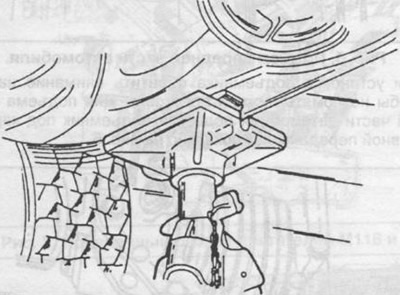
Fig. 8. Shape of the supporting surface.

Fig. 8. Shape of the supporting surface.


The most convenient and safe way to lift a car is with the help of special lifts, which allow you to quickly and efficiently perform all work on the lower part of the car body and suspension.
This article is available at: russian, bulgarian, belarusian, ukrainian, serbian, croatian, romanian, polish, slovak, hungarian
The article has been verified: Panova Maya Vladimirovna
Share with friends:
◀ Previous
S-Class W116 / Introduction to guide
Next ▶

Working conditions and tools
General repair instructions
Vehicle designation
General Provisions: Introduction
Maintenance and care
General specifications of the car
More similar articles for repairing other models

☛ Jacking and lifting the car Mercedes W202 (1993-2000)
☛ Lifting and towing a car Mercedes W123 (1976-1985)
☛ Checking the correct setting of the ignition timing on gasoline models Mercedes W463 (1999-2019)
☛ Relays — general information and checking the correct functioning Mercedes W163 (1997-2005)
Link in different formats to this article
Comments and feedback from visitors
No comments yet


How much will 34 + 40 ?


W220 (1998-2005) 
  • General information
  • Introduction to guide
  • User manual
  • Maintenance
  • Power unit
  • Engine repair
  • Cooling and heating systems
  • Power and exhaust systems
  • Ignition and control system
  • Charge and launch systems
  • Transmission
  • Automatic gearbox
  • Drive shafts
  • Chassis
  • Brake system
  • Front suspension
  • Rear suspension
  • Steering
  • Body
  • Body elements
  • Electrical equipment
  • Equipment and devices
  • Electrical circuits
W140 (1991-1998) 
  • User manual
  • Controls and instruments
  • Driving and operation
  • Maintenance
  • Power unit
  • Petrol engine V6
  • Petrol engine V8
  • Petrol engine V12
  • Diesel engine OM603
  • Diesel engine OM606
  • Cooling system
  • Power supply and injection system
  • Control system HFM-SFI
  • Control system LH-SFI
  • Control systems ME-SFI
  • Diesel control system
  • Ignition system
  • Charge and launch system
  • Transmission
  • Mechanical gearbox 717.438
  • Mechanical gearbox 717.454
  • Automatic gearbox 722.5
  • Automatic gearbox 722.6
  • Clutch and drive shafts
  • Differential
  • Chassis
  • Brake system
  • Steering
  • Front suspension
  • Rear suspension
  • Body
  • Exterior (external elements)
  • Interior (internal elements)
  • Electrical equipment
  • Equipment and devices
  • Electrical circuits
W126 (1979-1991, petrol) 
  • Power unit
  • Engine repair
  • Ignition system
  • Lubrication system
  • Cooling system
  • Fuel system
  • Fuel injection system
  • Transmission
  • Clutch and cardan
  • Mechanical gearbox
  • Automatic gearbox
  • Chassis
  • Front suspension
  • Rear suspension
  • Steering
  • Brake system
  • Electrical equipment
  • Power devices
  • Electrical circuits
W116 (1972-1980, petrol) 
  • General information
  • Introduction to guide
  • Power unit
  • 8-cylinder V8 engine
  • 6-cylinder I6 engine
  • Cooling and lubrication system
  • Power system (carburetor)
  • Fuel injection system
  • Ignition system
  • Transmission
  • Clutch and cardan
  • Car gearbox
  • Chassis
  • Front suspension
  • Rear suspension
  • Steering
  • Brake system
  • Electrical equipment
  • Power devices
  • Electrical circuits
 
MercedesMan.ru © 2017–2026 · Mobile version · Read about Mercedes · Sitemap: EN BG BY UA RS HR RO PL SK HU · Feedback · Site search · Bookmark A-Class (W168) · C-Class (W201) · C-Class (W202) · C-Class (W203) · E-Class (W123) · E-Class (W124) · E-Class (W210) · G-Class (W463) · M-Class (W163) · S-Class (W116, petrol) · S-Class (W126, petrol) · S-Class (W140) · S-Class (W220) · Sprinter · Vito 1 · Vito 2 · Vario 814D ·
 
We only use cookies without which some of the site's features may not be available.