



1. Check the fuse first if the heater does not work.
2. Remove the trim and check the fit of the power supply plugs to the rear window heater if the fuse is OK. If necessary, clean the plugs and remove corrosion from the contacts.
If the heater still does not work, check the condition of the power wires and the switch, as well as the switch and relay.
3. Check the condition of the heater filaments. To do this, check for voltage at the filament connection point by wrapping the tip of the measuring device's connecting wire with a sufficiently wide strip of foil. This foil is pressed against the heater filament during the test (see arrow in illustration).
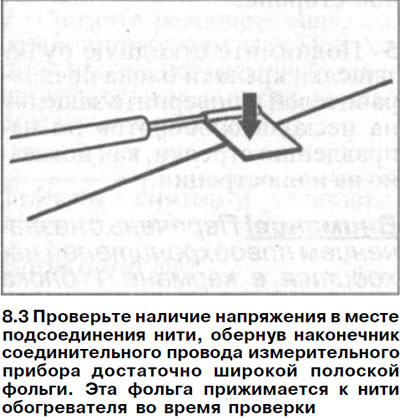
4. Start the engine and turn on the rear window defroster.
5. Measure the voltage by pressing the foil in the center of each thread. If the voltage on the threads is about 6 V, then the threads are OK. If the voltage is within 10 V or is absent, then the thread is broken.
If the heating filaments are broken, they can be restored using a silver-based conductive varnish, which is commercially available. Clean the damaged area before applying the varnish.
6. Cover the damaged area A on both sides with tape B and a brush. Apply conductive varnish C (see illustration).
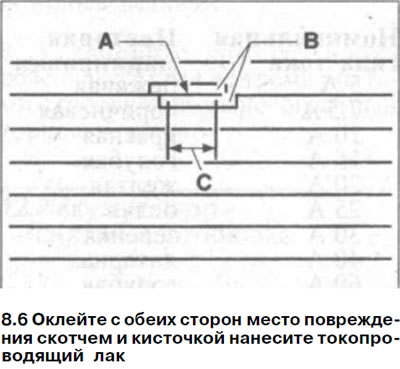
7. Let the varnish dry for 24 hours at a temperature of +25°C. If necessary, you can use a hair dryer. At a temperature of +150°C, the varnish dries in 30 minutes.
Warning! Do not turn on the rear window heater until the varnish has dried. Do not use gasoline or other solvents to treat the damaged thread.