



Warning! Do not reuse used brake fluid! Used brake fluid is easily distinguished from fresh brake fluid by its darker color.
Warning! Never drain brake fluid into the sewer or dispose of it in household waste containers! Information on the rules for disposal of technical fluids can be obtained at service stations.
1. Unscrew the differential lock drive hydraulic fluid reservoir cap.
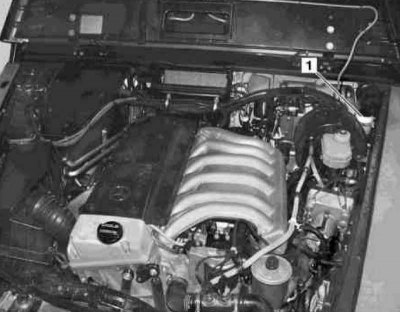
a — Location of the reservoir (1) for the hydraulic fluid of the differential lock drive on models produced before 12.2000.
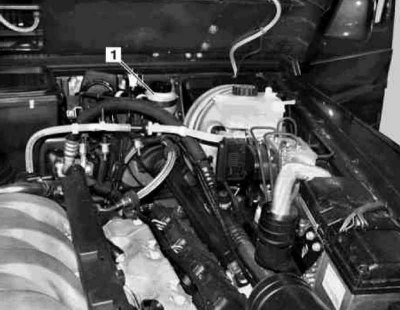
b — Location of the reservoir (1) for the hydraulic fluid for the differential lock drive on models produced from 12.2000.
2. Using a syringe or rubber bulb, pump out the liquid from the reservoir.
3. Connect a special device for bleeding the tract to the tank and connect the pressure hose.
4. Set the bleeding device to operating pressure according to the manufacturer's instructions.
5. Remove the protective cap from the bleed valve (2) on the differential lock actuator cylinder, pull a hose onto the valve, and lower the other end into a drain container.
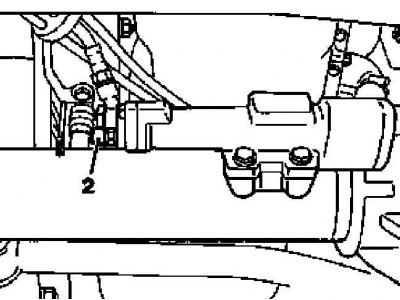
6. Release the valve and keep it open until clean, air-free, fresh brake fluid begins to flow out of the drain hose.
7. Tighten the valve, remove the hose and replace the dust cap.
8. Disconnect the pressure hose and the bleeding device from the tank, unscrew the connecting connector.
9. Add fresh hydraulic fluid to the reservoir, bringing its level to the "maximum" mark, then screw on the cap.