Contents: Engine and exhaust system ↡ Engine oil level - check ↡ Checking the oil level ↡ Checking the oil level using the…↡ The oil level will be displayed on…↡
This chapter covers all maintenance work on various systems, units and assemblies of the vehicle that must be performed as part of maintenance.
The necessary wearing parts and the expected type of special tool required are also indicated here.
It is recommended to check and, if necessary, increase the tire pressure, check and, if necessary, replenish the engine oil and cooling system fluids, windshield wiper and windshield washer at least every 4-6 weeks.
Attention! When purchasing spare parts, it is recommended to have the vehicle's technical passport with you, because often, to identify a vehicle, you need to know its body number, model range or year of manufacture. To be absolutely sure that you will purchase a part that is absolutely identical to the previous one, it is recommended, if possible, to take the old part with you to compare it with the one you are purchasing.
Engine and exhaust system
In accordance with the maintenance plan, the following types of work must be performed:
Change the engine oil and oil filter.
Cooling and heating systems. Check the fluid level, coolant concentration. Perform a visual check of the radiator for leaks and make sure there is no contamination on the outer surface of the radiator.
Engine. Perform a visual inspection for leaks, damage, and chafing of the pipes.
V-belt. Check condition.
Exhaust system. Check the condition and make sure there is no damage.
Cars with gasoline engines. Replace spark plugs.
Replace the fuel filter.
Air filter. Replace the replaceable filter element.
Replace the coolant.
Engine oil level - check
The engine oil level should be checked before each long trip and every 1,000 kilometers.
A car with a run-in engine should consume no more than 0.8 liters of oil per 1,000 km. Exceeding this volume indicates wear of the oil-reflecting caps and/or piston rings.
Attention! In modern models, the engine oil level is displayed by a level indicator, which is located on the instrument panel.
Fill with engine oil approved for use by Mercedes-Benz.
Checking the oil level
1. Warm up the engine and place it on a flat, horizontal surface.
2. Turn off the engine and wait at least 5 minutes for the oil to drain into the pan.
3. Remove the dipstick 1 and wipe it dry with a clean cloth (see illustration).
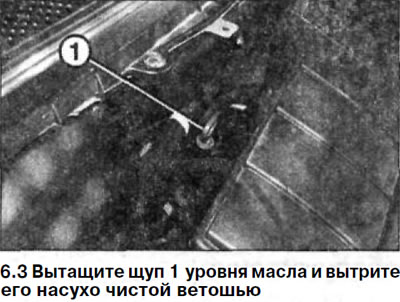
4. Insert dipstick 1 into place until it stops and pull it out again.
5. Check the oil level. It should be between marks 3 and 4 (MAX and MIN) on the dipstick (see illustration).
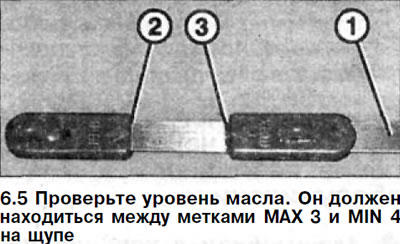
Caution! If the oil level is above the MAX mark, there is a risk of damaging the catalytic converter.
6. Add engine oil to the level of the upper mark if its level has reached the lower mark on the dipstick. The difference between the MAX and MIN marks is approximately 2 liters.
Attention! If by mistake more engine oil is poured than required, the excess must be removed.
7. Fill the oil through the oil filler neck 5 in the cylinder head cover (see illustration). Use only recommended types and brands of oils, do not use any additives.
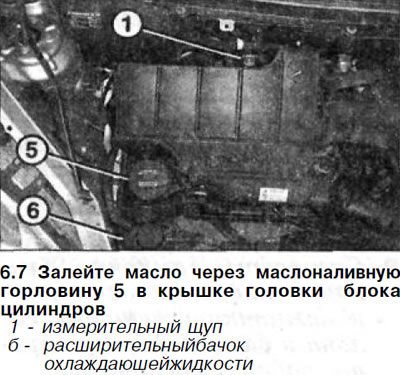
Attention! The random use of oils of different types has an adverse effect on the condition of the engine. If possible, do not mix motor oils of the same type but different brands. If necessary, you can safely mix oil of the same brand and type but different viscosity.
Checking the oil level using the gauge on the instrument panel
8. Turn on the ignition. Turn the key in the lock to position 2.
9. Wait until the oil level and clock readings appear on the instrument panel.
[Original can be found on the website mercedesman]
10. Press the trip mileage reset button twice within one second. The button is located on the left side of the instrument panel.
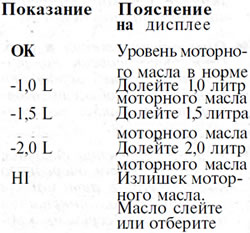
The oil level will be displayed on the instrument panel display