



The glow number characterizes the degree of thermal load of the spark plug. The lower the glow number of the spark plug, the higher the degree of its thermal load. At the same time, the spark plug removes heat better, thereby eliminating the possibility of glow ignition of the fuel mixture. A spark plug with a high thermal characteristic has the disadvantage that its self-cleaning temperature is higher. It is more prone to carbon formation, in particular when the engine often does not reach its operating temperature during operation, for example, driving in the city, short trips in winter.
The correct glow plug rating is determined by the vehicle manufacturer. There are spark plugs with one or more ground electrodes, with different thread lengths and thread diameters. When replacing a spark plug, only spark plugs that comply with the vehicle manufacturer's instructions must be installed.
The average service life of a spark plug varies. The electrode material also plays a significant role. Chrome-nickel alloy is characterized by very high thermal conductivity and high corrosion resistance. Silver has the best heat dissipation, and platinum electrodes have high corrosion resistance and resistance to burning. The service life of spark plugs is between 20,000 and 100,000 km, depending on the material of the electrodes and their number.
Depending on the engine design, there are two types of seals between the spark plug and the cylinder head.
The flat seal has an outer sealing ring that is not lost and is fixed to the spark plug body. With a conical seal, no additional sealing elements are required. In cases where installation space is limited, spark plugs with a flat seating surface and a small spanner size are used in most cases. Spark plugs with a conical seating surface have smaller dimensions due to their compact design.
Spark plugs should be changed strictly in accordance with the Vehicle Maintenance Schedule (see Chapter Schedule of current maintenance).
The appearance of the spark plug can be used to draw conclusions about the operation of the spark plugs, the quality of the mixture and the condition of the engine (pistons, piston rings, etc.).
When screwing in the spark plugs, make sure that they are not overtightened, as this may damage the sealing washer. Do not exceed the tightening torque specified in the Specifications.
Coal deposits
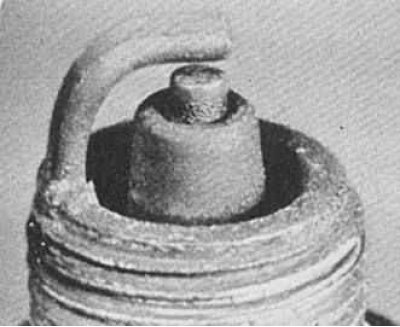
Symptoms: The presence of soot indicates an over-enriched fuel-air mixture or weak spark intensity. It causes misfires, makes starting difficult and leads to instability of engine operation.
Recommendations: Check if the air cleaner is clogged, the fuel level in the float chamber is too high, the choke is stuck and the contacts are too worn. Try using spark plugs with a longer insulator, which increases resistance to contamination.
Oiling
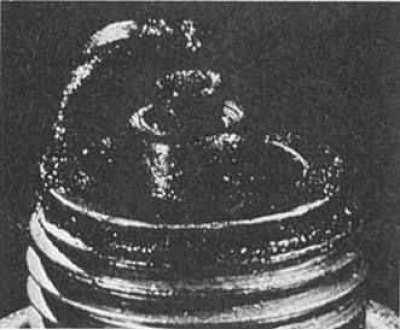
Symptoms: Oiling of the spark plug is caused by wear of the oil-deflecting caps. Oil gets into the combustion chamber through worn valve guides or piston rings. It causes misfires, makes starting difficult and leads to instability of engine operation.
Recommendations: Perform mechanical repairs and replace spark plugs.
Overheat
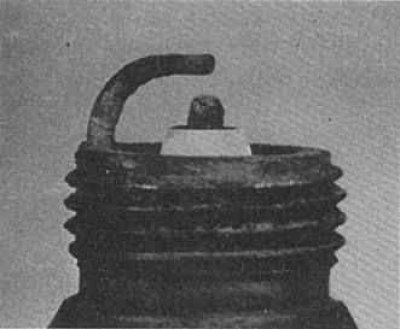
Symptoms: Porous, white insulator, erosion of electrodes and absence of any deposits. Leads to a reduction in spark plug life.
Recommendations: Check that the spark plug heat range is correct, that the ignition timing is set correctly, that the fuel/air mixture is not too lean, that there are no vacuum leaks in the intake manifold, and that the valves are not stuck. Also check the coolant level and that the radiator is not clogged.
Too early ignition
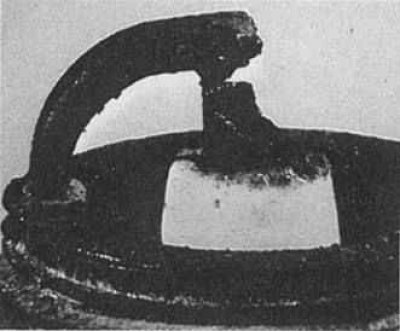
Symptoms: The electrodes are melted. The insulator is white, but may also be contaminated due to misfires or foreign particles entering the combustion chambers. May cause engine failure.
Recommendations: Check the glow number of the installed spark plugs, the ignition timing, and the quality of the mixture (isn't it too poor?), whether the cooling system is clogged and whether the lubrication system is functioning normally.
Conductive gloss
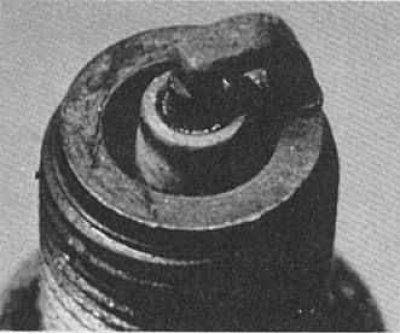
Symptoms: The insulator has a yellowish color and a polished appearance. Indicates a sudden increase in temperature in the combustion chambers during sharp acceleration. Normal deposits melt, acquiring the appearance of a varnish coating. Leads to misfires at high speeds.
Recommendations: Change the spark plugs (cooler, while maintaining the same driving style).
Short circuit of electrodes
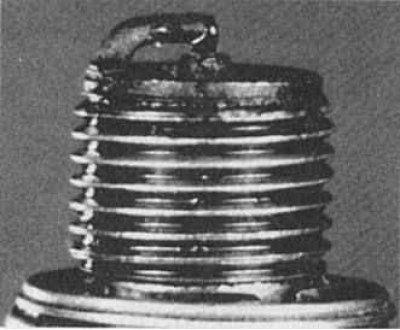
Symptoms: Combustion waste gets into the interelectrode space. Solid deposits accumulate, forming a bridge between the electrodes. Leads to ignition failure in the cylinder.
Recommendations: Remove deposits from the interelectrode space.
Normal condition of the candle
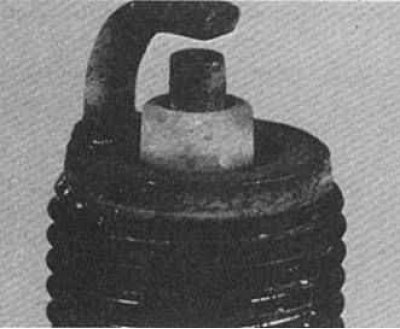
Symptoms: Gray-brown color and slight wear of the electrodes. The glow number of the spark plugs corresponds to the type of engine and its general condition.
Recommendations: When replacing spark plugs, install spark plugs of the same type.
Ash formation
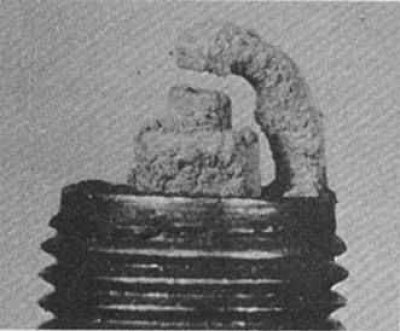
Symptoms: Soft, brownish deposits on one or both spark plug electrodes. They are caused by oil and/or fuel additives. Excessive buildup can insulate the electrodes and cause misfires and rough running under acceleration.
Recommendations: If deposits accumulate quickly, replace the oil seals to prevent oil from entering the combustion chambers. Try changing the fuel brand.
Wear
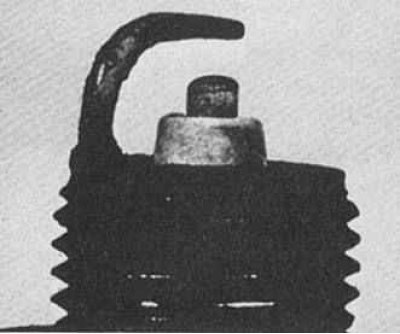
Symptoms: Rounding of the electrodes with a small accumulation of deposits at the working end. The color is normal. It leads to difficulty in starting the engine in cold, wet weather and increased fuel consumption.
Recommendations: Replace the spark plugs with new ones of the same type.
Detonation
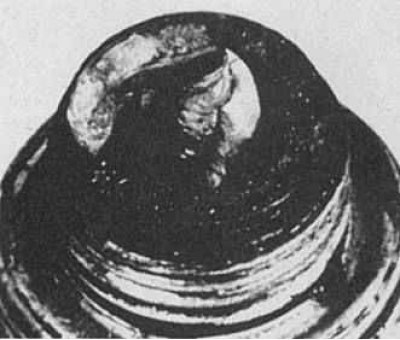
Symptoms: Insulators may be chipped or cracked. Inaccurate spark plug gap adjustment techniques may also damage the insulator. Piston damage may result.
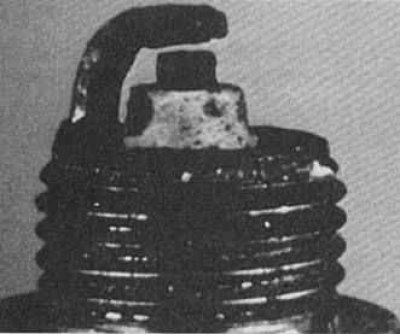
Splashing
(Text republished from the website MercedesMan.ru)
Symptoms: After a long period of misfire, deposits may become loose while the combustion chamber remains at operating temperature. At high speeds, deposits flake off the piston and stick to the hot insulator, causing misfires.
Recommendations: Replace the spark plugs or clean and reinstall the old ones.
Mechanical damage
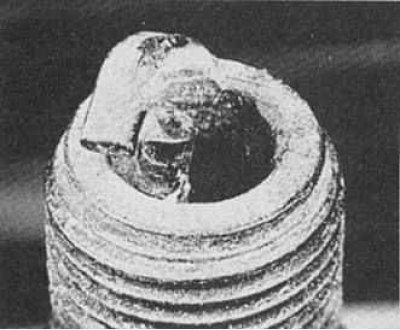
Symptoms: Can be caused by foreign materials entering the combustion chamber or occur when the piston hits a spark plug that is too long. Leads to cylinder failure and piston damage.
Recommendations: Remove foreign particles from engine and/or replace.