



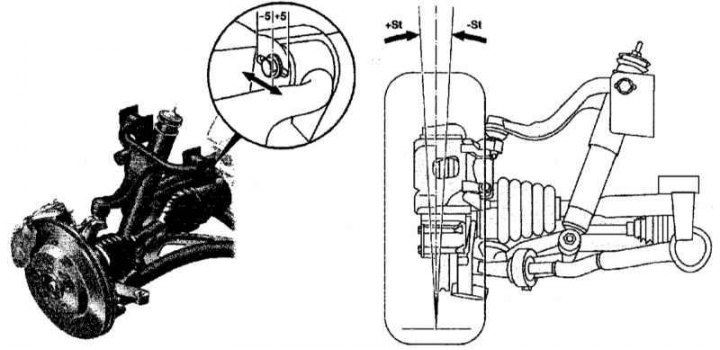
Checking and adjusting the front wheel alignment
ST + — Positive camber
ST - - Negative camber
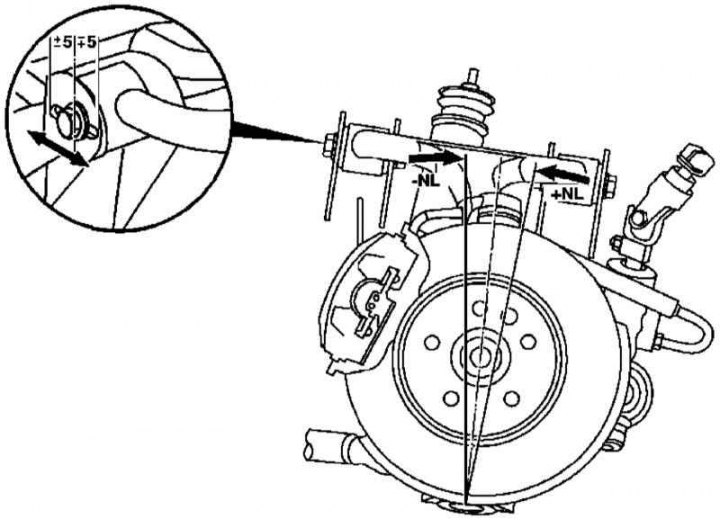
Checking and adjusting the front wheel runout
NL — Run-out
Examination
1. Perform the necessary preliminary checks (see Section Car Wheel Alignment Angles - General Information).
2. Check that the axle ground clearances are adjusted correctly (see Section Checking and adjusting the ride height), make appropriate adjustments if necessary.
3. Measure the camber and run-out angles.
Note: The coast down is measured with the wheels turned at an angle of 20°. Compare the measurement results with the requirements Specifications, make appropriate adjustments if necessary.
Adjustment
1. Adjustment of the front wheel camber is performed using bolted connections securing the rear corners of the upper wishbones to the side beams of the frame.
2. Bolted connections for attaching the front corners of the upper arms to the frame allow for adjustment of the runout.
3. Finally, also adjust the wheel alignment (see Section Checking and adjusting convergence).
Rear wheels
The corresponding illustrative material is presented in the accompanying illustrations, to which all references in the text refer.
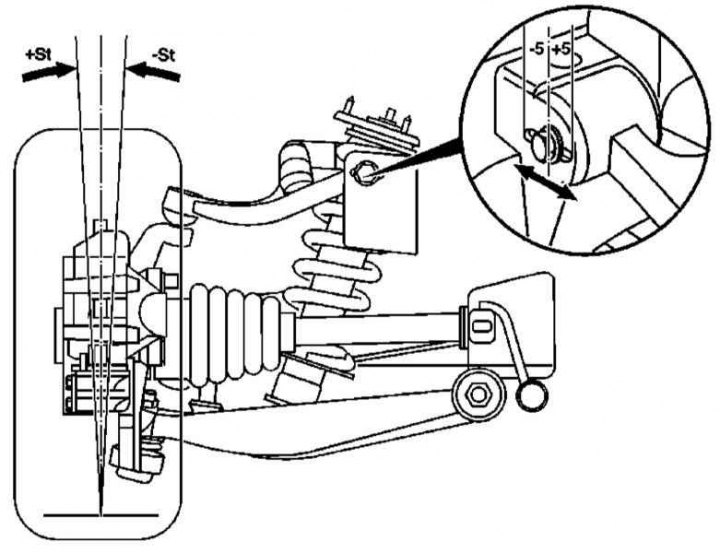
Checking and adjusting the rear wheel alignment
+ST — Positive camber
-ST — Negative camber
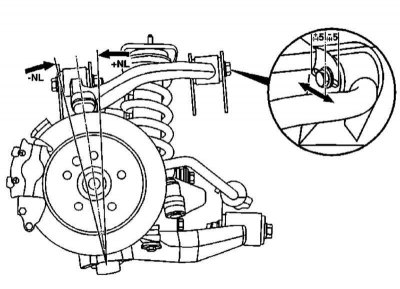
Checking and adjusting the rear wheel runout
NL — Run-out
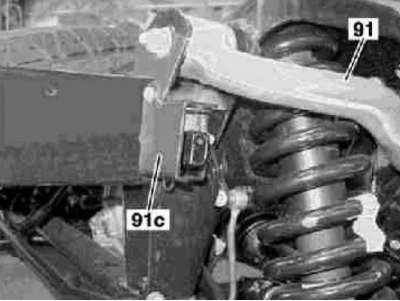
Checking and adjusting the rear wheel runout
91 - Upper longitudinal stretch
91c - Mounting plate
Examination
1. Perform the necessary preliminary checks (see Section Car Wheel Alignment Angles - General Information).
2. Check that the axle ground clearances are adjusted correctly (see Section Checking and adjusting the ride height), make appropriate adjustments if necessary.
3. Measure the camber and run-out angles.
Note: The runout is measured using an electronic inclinometer. Compare the measurement results with the requirements Specifications, make appropriate adjustments if necessary (see below).
Adjustment
1. Adjustment of the front wheel camber is performed using bolted connections securing the front corners of the upper wishbones to the side beams of the frame.
Note: On models equipped with xenon headlights, the mounting plate (91c) must be detached from the frame and moved to the side together with the ride level sensor.
2. Bolted connections for attaching the rear corners of the upper arms to the frame allow for adjustment of wheel runout.
3. Finally, also perform the convergence adjustment (see Section Checking and adjusting convergence).