



Examination
6. Check the pressure plate for cracks, burnouts and ribbing. Replace the pressure plate if necessary.
7. Check the condition of the segments (see arrows in the illustration) diaphragm spring. If necessary, carefully align the segment projections with pliers. The permissible residual thickness of the segments must be at least 0.3 mm.
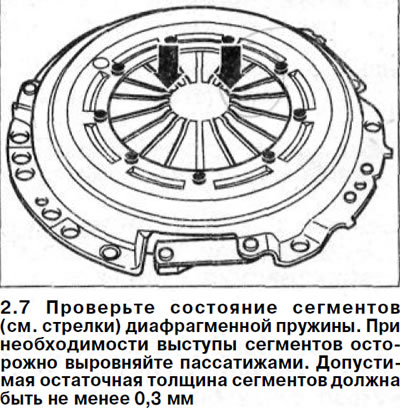
8. Check the fastening of the diaphragm spring segments and make sure there are no cracks, the rivets are strong and seated. Replace the disc with damaged or loose rivets.
9. Before installing the new clutch, remove the protective varnish coating from the friction surfaces of the pressure plate using solvent. After this, treat the friction surfaces of the driven and pressure plates with coarse sandpaper.
10. Replace clutch discs that are oily or have mechanical damage.
11. Make sure the release bearing operates quietly, is not worn and has a tight fit. If not, replace the bearing.